

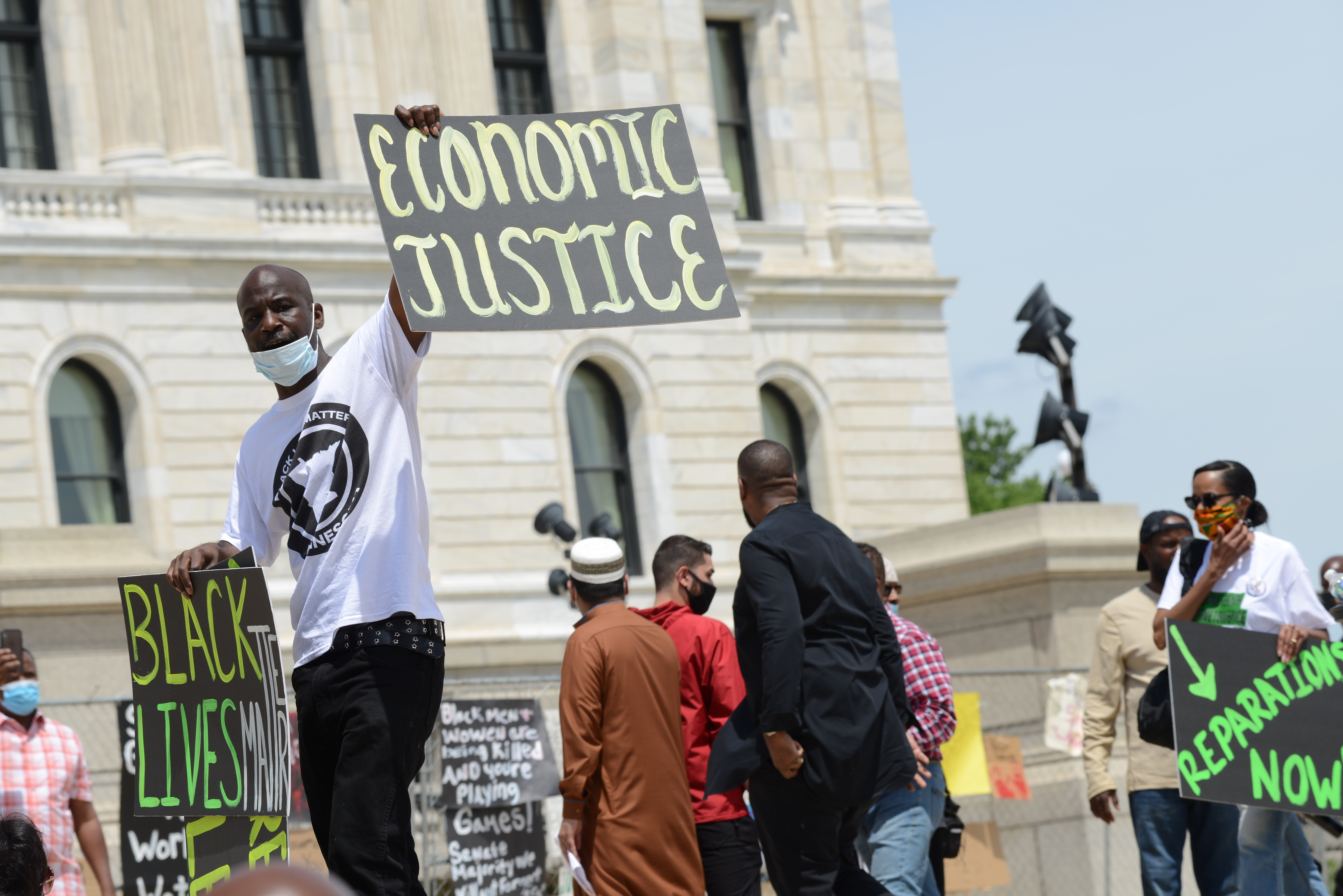
It’s been over a decade since Ta‑Nehisi Coates published “The Case for Reparations” in The Atlantic. In his article, Coates (2014) vividly recounts the harsh realities of housing discrimination over time and across regions through the eyes of African Americans. The story of Clyde Ross—from his times as a Mississippi native to Chicagoan—vividly describes the ways in which city-building processes contributed to racial and urban inequality. This critically acclaimed article reminds us of the intimate connection between Black history, urban history, and American political development. Moreover, as the name of the article suggests, Coates extends a longstanding call for reparations for Black Americans.
The call for reparations has been ongoing since the Civil War. More recently, across the US, a growing number of cities and states have begun to enact reparations-style programs aimed at addressing the enduring impacts of slavery, segregation, and systemic racism. Evanston, Illinois, became the first city to implement a reparations program, using cannabis tax revenue to provide housing grants to Black residents harmed by discriminatory housing practices. Similarly, Asheville, North Carolina, has committed to redressing racial disparities through investments in Black homeownership and economic development.
More recently, Tulsa, Oklahoma, announced a $105 million reparations initiative in response to the 1921 Tulsa Race Massacre, representing a major municipal effort to repair historic racial violence. On a larger scale, California established a statewide Reparations Task Force, which has proposed broad-ranging recommendations including financial compensation, policy reforms, and institutional accountability. These programs, along with others in cities like San Francisco, Chicago, and Amherst, Massachusetts, reflect a shift toward local and state-led efforts to reckon with historical injustice and promote racial equity through concrete, place-based interventions.
These developments have produced a wide range of generative debates. Advocates of racial justice who remain skeptical of reparations impugn the mainstream of reparations thinking as race-reductive (Reed 2020; Táíwò 2022). Other critics, favoring national over subnational reparations, argue that the federal government should be the sole authority responsible for redress because the harms of slavery, Jim Crow, and ongoing racial discrimination were instituted and maintained through federal policy (Boxill 2003; Darity and Mullen 2022). From the constitutional protection of slavery to redlining backed by federal housing programs, the scale and scope of the injustices demand a national remedy.
Local and state programs, while commendable, arguably risk fragmenting the response and creating unequal treatment based on geography given their limited constitutional powers (Simone 2021). Additionally, local efforts often lack the financial capacity to provide meaningful redress, whereas the federal government has the fiscal tools to implement reparations at a scale that matches the harm. Critics also caution that devolving responsibility to states and cities allows the federal government to shirk its accountability and dilute a unified national reckoning with the legacy of anti-Black racism. Reparations, they argue, are a matter of justice that must be handled with the weight, authority, and reach that only the federal government can provide. To this end, reparations have taken several forms of redress (Balfour 2023).
This call for papers invites critical engagement with the emerging role of cities in addressing historical and ongoing racial injustices through reparations programs. As municipalities across the United States begin to grapple with their complicity in slavery, segregation, displacement, and racial wealth extraction, this call seeks scholarship that examines the design, implementation, and implications of urban reparations initiatives. We welcome submissions that analyze local policies aimed at redressing racial harms—whether through housing, education, land return, economic development, or cultural restoration—as well as the political, legal, and ethical debates that surround them.
Papers might explore the possibilities and limitations of municipal-led reparations, their relationship to federal inaction, and how local, regional and state efforts intersect with grassroots organizing and broader visions of racial justice. We are particularly interested in scholarship that interrogates the spatial dimensions of reparations, including how place-based harms are identified and how repair is imagined in relation to land, neighborhood, and community. Contributions that situate urban reparations in transnational or comparative contexts are also welcome, especially those that challenge conventional policy paradigms and offer bold, liberatory visions of repair.
Abstract submissions due: June 1, 2026
Decision on abstract submissions: July 1, 2026
Papers due: October 1, 2026
Please email abstracts to:
– Prentiss A. Dantzler (p [dot] dantzler [at] utoronto [dot] ca)
– Rashad Williams (will5638 [at] umn [dot] edu)
– Akira Drake Rodriguez (akirad [at] upenn [dot] edu)
Bibliography
- Balfour, L. 2023. “The politics of reparations for Black Americans”, Annual Review of Political Science, vol. 26, no. 1, pp. 291–304.
- Boxill, B. R. 2003. “A Lockean argument for black reparations”, The Journal of Ethics, no. 7, pp. 63–91.
- Coates, T.‑N. 2014. “The Case for Reparations”, The Atlantic, June. Available online at the following URL: www.theatlantic.com/magazine/archive/2014/06/the-case-for-reparations/361631.
- Darity, Jr., W. A. and Mullen, A. K. 2022. From Here to Equality: Reparations for Black Americans in the Twenty-First Century, Chapel Hill: University of North Carolina Press.
- Reed, Jr., A. 2020. “Socialism and the argument against race reductionism”, New Labor Forum, vol. 29, no. 2, pp. 36–43.
- Simone, B. 2021. “Municipal reparations: Considerations and constitutionality”, Michigan Law Review, vol. 120, no. 2, pp. 345–391.
- Táíwò, O. O. 2022. Reconsidering Reparations, Oxford: Oxford University Press.
Metropolitics is an editorially peer-reviewed online journal that publishes concise academic essays and papers aimed at an international audience. The journal’s mission is public scholarship: short-form work about cities and urban politics, based on original research, on a quick time frame that allows researchers to contribute to public debate and make their scholarly work relevant to a broad readership.
What we publish
● Essays (1,500 words), which draw on empirical work to develop arguments relating to societal and political debates, and which provide a new perspective on key urban issues and challenges.
● Debates (1,500 words), which relate to current social, professional or political developments on current issues, and concisely present the state of knowledge bearing on current public debate.
● Reports from the Field (1,500 words), which draw on case studies, experiments or remarkable situations to shed new light on urban phenomena and developments.
● Reviews (1,000 words), which offer authors’ perspectives on books, films, exhibitions and other events, evaluating their intellectual contributions for a wide audience.
● Interviews with activists and policymakers, presented in audio, video or text form.
View our editorial charter and style guide.
Access to Metropolitics is free. Articles can be downloaded as PDF files; videos are available as podcasts.


